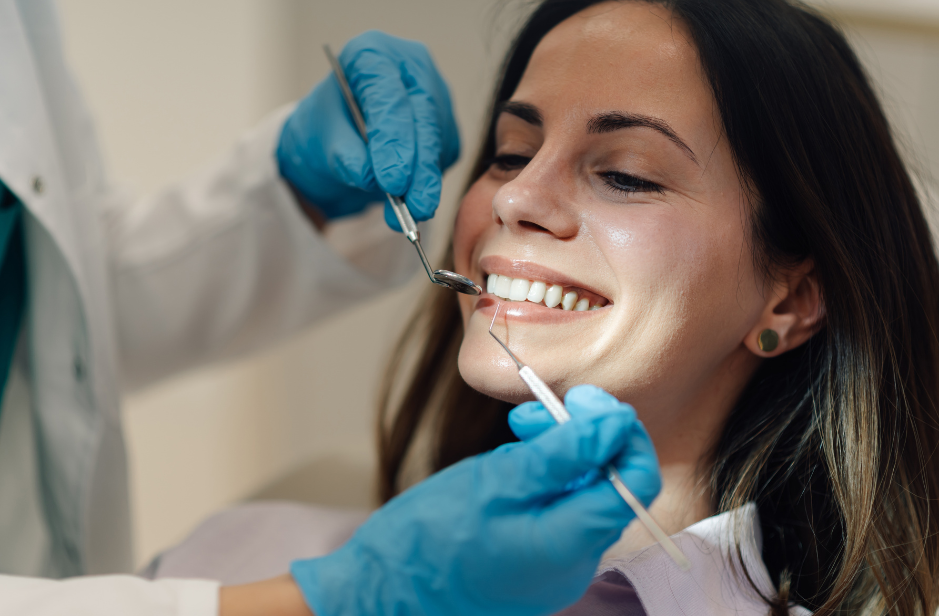
BDS Dental offers composite dental bonding from our established private practice on Finchley Road in Golders Green, NW11. Bonding is one of the most versatile and conservative cosmetic treatments available — it can address a wide range of aesthetic concerns in a single appointment, with minimal preparation and no removal of healthy tooth structure.
Our cosmetic dentistry team includes Dr. Ellie Bergin (GDC No: 76585), who has been practising at BDS Dental since 2005, and Dr. Ian Davis (GDC No: 74993). Both are registered with the General Dental Council, and our practice is regulated by the Care Quality Commission (CQC).
Dental bonding — also known as composite bonding or cosmetic bonding — is a procedure in which a tooth-coloured resin material is applied directly to the surface of a tooth and shaped by hand. The resin is then hardened and bonded permanently in place using a specialised curing light. Once set, it is trimmed, shaped, and polished to achieve a result that blends naturally with the surrounding teeth.
Unlike porcelain veneers, bonding requires little or no removal of natural tooth enamel. The tooth underneath remains fully intact, which makes bonding one of the most conservative options in cosmetic dentistry.
Composite bonding is a highly adaptable treatment and can be used to address a wide range of cosmetic concerns, including:
Your dentist will assess your teeth at your consultation and advise honestly on whether bonding is the right approach for your particular concerns, or whether an alternative treatment — such as whitening or porcelain veneers — would produce a better or longer-lasting result.
One of the main advantages of composite bonding is its simplicity. In most straightforward cases, the entire treatment can be completed in a single appointment.
Your dentist will begin by selecting a composite resin shade that closely matches the colour of your natural teeth. The surface of the tooth is gently conditioned to help the resin bond securely. The resin is then applied, sculpted, and shaped carefully to achieve the desired result. Once your dentist is satisfied with the shape and symmetry, the resin is hardened using a curing light and then polished to a smooth, natural finish.
In more complex cases — for instance, where multiple teeth are being treated or significant reshaping is involved — the treatment may take place over two or three appointments to achieve the best possible outcome.
With good care, composite bonding can last several years. Longevity varies depending on the location of the bonding, your bite, and your daily habits. Bonding on front teeth that are not under significant biting force tends to last longer than bonding on teeth that experience heavier pressure.
Habits such as nail-biting, chewing pens, or biting into very hard foods can shorten the lifespan of the bonding. Staining foods and drinks — particularly coffee, tea, and red wine — can gradually affect the colour of the resin over time, though polishing at your regular hygiene appointments helps manage this.
When bonding does eventually wear or chip, it is generally straightforward to repair or replace. Because no tooth structure was removed during the original treatment, your options remain open for future refinements or alternative treatments.
Both composite bonding and porcelain veneers can deliver significant cosmetic improvements to your smile, but they work in different ways and suit different situations.
Bonding is well-suited to patients who want to address one or a few specific concerns with minimal intervention and without committing to irreversible enamel removal. It is also a good starting point for patients who are considering a more comprehensive smile transformation but want to explore a less permanent option first.
Porcelain veneers are generally more durable and stain-resistant, and tend to produce a more consistent aesthetic result across multiple teeth. They are a better choice for patients who want long-term results with minimal maintenance, and are willing to accept the modest enamel preparation that is involved.
Your dentist will discuss both options with you and give you a clear, honest recommendation based on your teeth, your goals, and your budget.
BDS Dental is a long-established private practice that has been caring for patients in Golders Green and across North London for decades. Many of our patients come to us through personal recommendation, and we take that trust seriously.
We do not treat bonding as a quick cosmetic fix. Our approach is to assess your teeth carefully, explain what bonding can realistically achieve, and ensure the result looks natural and is well-matched to the rest of your smile. The skill of the dentist applying the resin makes a significant difference to the final outcome, and our team brings considerable experience to every case.
Dental bonding at BDS Dental starts from £295 per tooth. The total cost will depend on the number of teeth being treated and the complexity of the work involved. Your dentist will provide a clear, itemised cost estimate at your consultation before any treatment begins.
For a full overview of our treatment fees, please visit our dental fees page. To book a consultation or discuss your options, please get in touch with our team.
For most patients, composite bonding is entirely comfortable and does not require anaesthetic. Because the treatment involves adding material to the tooth rather than removing it, there is typically no drilling or sensitivity involved. If bonding is being used to treat an area near an exposed root or a sensitive tooth, your dentist will discuss this with you in advance and can use anaesthetic if needed.
When applied by an experienced dentist, composite bonding can look very natural. The resin is colour-matched to your existing teeth, and the shaping and polishing process allows the dentist to blend the bonded area with the surrounding tooth structure. Results depend on the skill of the clinician, the complexity of the case, and the colour of your natural teeth — all of which your dentist will discuss with you before treatment begins.
Whitening gels do not change the colour of composite resin — only natural tooth enamel responds to whitening treatment. This means that if you whiten your teeth after having bonding placed, the bonded area may no longer match the surrounding teeth. For this reason, it is generally advisable to complete any teeth whitening before having bonding carried out, so the resin can be matched to your whitened shade. Your dentist will guide you on the best sequence of treatment.
Bonded teeth do not require any special cleaning routine — brushing twice daily with a fluoride toothpaste and flossing regularly is sufficient. Avoiding habits that place excessive pressure on the bonding — such as nail-biting, chewing pens, or biting directly into very hard foods — will help prolong the result. Attending your regular hygiene appointments allows the bonding to be monitored and polished to maintain its appearance.
In most cases, yes. Because composite bonding involves adding material to the tooth rather than removing enamel, the treatment is largely reversible. The bonding can be removed and the tooth returned to its original state, or replaced with a different type of restoration in the future. This is one of the key reasons bonding appeals to patients who want to improve their smile without making a permanent commitment.
Complete the form below to submit an enquiry and a member of our team will be in contact shortly.
Hear from our real patients.
I am a patient of Dr Nina Kosarevic – she is a fantastic dentist and aesthetic medicine clinician. I have recently started seeing her for concerns regarding forehead lines and we discussed options in … Read More
I travelled from East London to Golders Green as I was informed by multiple people that Dr Nina is a brilliant dentist. I had a chipped tooth and at 7 months pregnant my options were limited. Dr Nina … Read More
I had the pleasure of seeing Nina today at Bergin Davis Sidelsky Dental Practice. She is incredibly professional and attentive to detail — she simply wouldn’t let me leave until she had thoroughly… Read More
Nina is highly experienced and efficient, kind and is great with kids. My daughter recently had composite bonding and is over the moon with the results. Thank you Nina! 🙏🏻
I had the best experience with Nina. She is simply fantastic! As someone who is terrified of needles coming in for a filling was petrifying but Nina & Elisheva were so patient with me making it a very… Read More